Showing posts with label historical fiction. Show all posts


Completion Date: July 30, 2007
Pages: 324
Publication Year: 2006
Received from Random House prior to 2007.
Book One in the Drakon Series

Reason for Reading: I was looking for something different about the time that I acquired this book. It is really a mix of fantasy, historical fiction, and romance.

For centuries they’ve lived in secret among northern England’s green and misted hills. Creatures of extraordinary beauty, power, and sensuality, they possess the ability to shape-shift from human to dragon and back again. Now their secret–and their survival–is threatened by a temptation that will break every boundary....

Dubbed the Smoke Thief, a daring jewel thief is confounding the London police. His wealthy victims claim the master burglar can walk through walls and vanish into thin air. But Christoff, the charismatic Marquess of Langford, knows the truth: the thief is no ordinary human but a “runner” who’s fled Darkfrith without permission. As Alpha leader of the dra´kon, it’s Kit’s duty to capture the fugitive before the secrets of the tribe are revealed to mortals. But not even Kit suspects that the Smoke Thief could be a woman.

Clarissa Rue Hawthorne knew her dangerous exploits would attract the attention of the dra´kon. But she didn’t expect Christoff himself to come to London, dangling the tribe’s most valuable jewel–the Langford Diamond–as bait. For as long as she could remember, Rue had lived the life of a halfling–half dra´kon, half mortal–and an outcast in both worlds. She’d always loved the handsome and willful Kit from the only place it was safe: from afar. But now she was no longer the shy, timid girl she’d once been. She was the first woman capable of making the Turn in four generations. So why did she still feel the same dizzying sense of vulnerability whenever he was near?

From the moment he saw her, Kit knew that the alluring and powerful beauty was every bit his Alpha equal and destined to be his bride. And by the harsh laws of the dra´kon, Rue knew that she was the property of the marquess. But they will risk banishment and worse for a chance at something greater. For now Rue is his prisoner, the diamond has disappeared, and she’s made the kind of dangerous proposition a man like Kit cannot resist....In this bewitching novel, Shana Abé transports us into a world of exhilarating romance and magic.
This book was an interesting read. Normally Shana Abe writes romance novels, and the Romantic Times Bookclub calls this book the "Historical Romance of the Year" for the year that it came out, so the fact that I read it is something of a mystery even to me. I actually was interested in the fantasy elements and seemed to overlook the romance elements until I actually owned the book. I think the best place to start is by saying that this book has a very nice cover. There are dragons in this book, of course, and they are described as more sleek than dragons that we regularly read about in fantasy novels. This book shows an example of what they were supposed to look like.

So, the pros of this book. I really liked the main female character, Rue. She could be annoying at times, but for the most part she had a very fierce spirit for the time that this book came out in. She left home because she was different, and everyone thought that she was dead, but it turns out that she faked her death so that she could have a life of her own. That, and she has powers that are not common in females of their tribe. I liked the interaction between her and other characters in the book. The lead male, Kit, was a good character too. He could be a bit demanding, he was the alpha drakon afterall, but he was generally just doing what he thought was best for his people. He thought that bringing Rue home was the best thing for her, even if she did not quickly agree.

The problems I had with this book, there were a few dull spots that I felt dragged a bit. There was one part of the book where I was so bored I put the book down for a bit and considered whether I would actually finish it, but I am glad I preservered. I found that I wanted to know what happened next and how the book ended. There was a bit too much romance for my taste as well, but it is a historical romance, I should have expected it. It was tasteful, though, so it was not so bad.

Overall, not the best thing I have ever read, but I plan to read The Dream Thief and maybe onward if more books are released in the series. It is nice sometimes to think that we do not know everything about our world, and that maybe things like dragons roam the earth without us regular people even being aware.


In this first of what looks to be an excellent series, Victorian England has vampires at every level of society, especially the higher ones, and they engage in incessant intrigue, power games, and casual oppression of the weak--activities, as we know, that are all too human. Numerous characters from literature and from history appear in both major and cameo roles. Spectacular fight scenes, stormy politics, and a serial vampire killer keep the action lively. A scholarly bibliography is included.


This was one of the most disappointing reads I've had in a long time. I had heard nothing but praise for this vampire novel but I don't understand why that is. The writing, IMO, was so bland and uninspiring I barely dragged through page 49 before I decided I could take no more. Mrs Newman seems to be in love with hyphens, so much so that I counted 11 on one page alone. So many words were hyphenated: new-born, un-dead, curly-haired, knee-tremblers, desk-banging, boot-leather, bread-knife, vampire-slayer,after-darks, tea-bowls...and on and on and on. It was distracting, to say the least. Too many sentences dragged on or made no sense and I found my mind wandering more than once. I couldn't care for any of the protagonists and I certainly didn't care to know just who the Silver Knife murderer was.

Maybe I can try and get into this another time but, for now, it's a DNF.


Highly disappointed in this historical mystery novel by Janet Gleeson. From Amazon:

Nathanial Hopson is an apprentice to the famed cabinetmaker Thomas Chippendale. This position, which often involves executing his master's designs in the homes of the wealthy and titled, allows Hopson access to all kinds of goings-on, both upstairs and downstairs. This device also allows Gleeson to give readers insights into both eighteenth-century social tensions and the wonders of antique furniture. The mystery starts with Hopson, assigned to make a Chippendale bookcase at the estate of Lord Montfort, discovering Montfort's dead body in the library, his hand clutching an elaborately carved box fashioned from grenadillo wood, his neck covered with leeches. The murder of the designer of the box, an apprentice friend of Hopson's, follows. The second murder convinces Hopson that his own life may be in danger, prompting him to sail into a full-scale investigation of both crimes.


There were many, many things I found rubbed me the wrong way with this book. So much so that I merely skimmed the last few chapters just to find out how it would all end.

One of the things that bothered me is the fact that the entire book is supposed to be one big letter. Make that huge letter. The very first page is a letter from Nathaniel, our hero, to Alice, the woman he is in love with. Clearly throwout the course of the mystery investigation they've had a fallout and, as Nathaniel explains in this letter, the entire book is his accounts of everything that happened so that she may understand what was going on and perhaps forgive him. Now, my problem with this is that, as a rule, letters don't have entire conversations in them. If this was supposed to be an account of everything that happened and you are writing all of this to someone I don't think you would send anyone 200+ pages written as a book, with entire conversations, descriptions of every place you ever went, and even word for word copies of quite a few letters you've discovered or have been sent by various people. If he was narrating to the reader or writing his memoirs or something I'd go with this but, again, a 200+ page letter that reads more like a book just so that someone forgives you? The fact that Alice was present a lot throwout the book and knew what happened half of the time makes it even more silly. Why the need to retell her every single conversation you ever had? She was there! She knew all this! It just didn't make sense at all.

Next is the fact that Alice ALWAYS just happens upon Nathaniel when he is in a compromising position with some "pretty young thing." Of course there are explanations as he gets help from these women but how is it that Alice catches him 3 times with 3 different women in compromising positions? Furthermore we as the readers know that nothing is going on because it's always some accident that lands him in said positions. Now, Nathaniel has a reputation for getting along famously with the ladies and he does get it on with quite a few of them yet none of these times does Alice happen to find him. It's only when he is really just investigating that she comes along and gets the wrong idea. How convenient. Also, how in the hell does she find him at those times? Is she a stalker? I mean, the man is literally ALL over the place with the investigation, going from town to town. He talks to a lot of people yet Alice only finds him at these moments when he is talking to the ladies. One particular time I found even worse than the others. He has gotten into an accident and the lady he is visiting to get some answers from is an actress. She offers him a bath and new clothes because he literally is covered in dung from head to toe. All is well until he goes into the bedroom to change. As he is standing in the middle of the room naked he happens to look out the window and guess who is looking back at him: Alice. First of all this is set in the late 1700's and I don't think people where that open to stand naked or half naked in front of a window that leads to a backyard much less the street. Second of all, I can't believe Alice was just strolling along in her carriage when she just happens to look inside someone's window and it just happens to be the one where Nathaniel is standing naked. The other two times were just as silly but I felt that was the worse.

Another thing is the way Alice acts towards Nathaniel. It is clear that he fancies her yet he says nothing and simply treats her with respect. He knows that she knows of his reputation so he decides he must take it slow and perhaps do the friendship first. Since he hasn't proposed to her or is even courting her what right does she have to get so angry with him when she catches him in these awkward moments? Sure, she may like him but if you are just friends it's a bit presumptuous on her part that he should be without other women. You don't have the right to judge your friends like that and what they do and who they do it with is their business. She just comes off as immature. Especially since, knowing full well that Nathaniel told her about one of the suspects she decides to ignore the warning on the basis that she feels he is simply jealous. She is still upset with him at this point over the women and she ignores the fact the man she is flirting with is a suspected killer and everything points to him.

Worse still is the way that Nathaniel comes across. His preoccupation with Alice and her misinterpretation of things makes him look like a whimp. He is doing nothing wrong yet he runs after her all the time to ask for forgiveness and to explain what happened. Not once does he stand up and asks what her damn problem is. He is also a coward and hesitates over and over never once standing up for himself. He lets everyone order him around simply because they are his superiors or because he is afraid to lose his job. There comes a time when you have to stand up for yourself, everyone else be damned, especially if you are risking your neck to find out who committed the murders. Also, the fact that he is always fainting when he sees blood and guts is annoying. He is not the only man involved with the murders yet he is the only one that gets physically ill every time they find a dead body. I can understand that no one likes to see dead people, especially gruesome murders, but none of the other men ever show as much weakness as Nathaniel does. In fact one of the men even comments on the fact that they don't feel any more comfortable than he does around dead people yet none of them take it so bad.

All in all the novel was a big disappointment. I would recommend it if only because the mystery was good enough. However, the main characters of Nathaniel and Alice are too damn annoying, especially as the story moves along, and the whole supposed "letter" format with conversations included just didn't do it for me.

A 2 out of 5.


Kailana's Review


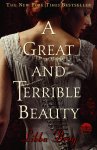
A young adult, soon to be, trilogy that I have wanted to read for a while, this enters the marks as one of the better books I have read this year. Young adult books are much better than they were when I was a young adult, I know that much.

From the back of the book:

Gemma Doyle isn't like other girls. Girls with impeccable manners, who speak when spoken to, who remember their station, and who will lie back and think of England when it's required of them.

No, sixteen-year-old Gemma is an island unto herself, sent to the Spence Academy in London after tragedy strikes her family in India. Lonely, guilt-ridden, and prone to visions of the future that have an uncomfortable habit of coming true, Gemma finds a chilly reception. But she's not completely alone... she's followed by a mysterious young man, who warns her to close her mind against her visions.

For it's at Spence that Gemma's power to attract the supernatural unfolds; there she becomes entangled with the school's most powerful girls and discovers her mother's connection to a shadowy group called the Order. It's there that her destiny waits... if only she can believe in it.

A GREAT AND TERRIBLE BEAUTY is a curl-up-under-the-covers kind of book... a vast canvs of rustling skirts and dancing shadows and things that go bump in the night. It's a vividly drawn portrait of the Victorian age, when girls were groomed for lives as rich men's wives... and the story of a girl who saw another way.


I regret that it took me so long to discover this book. I had heard of it, but it never grabbed my attention enough to buy it until recently. Now, I can't wait to read the next one and I hope it will be equally good. Young adult novels have come a long way, some of them are even better than novels marketed at adults.

This novel was attractive to me because people were saying it had fantasy elements to it. I enjoy fantasy novels, so I decided to see what these fantasy elements were. This book takes place in the later part of the 19th-century. The main character, Gemma Doyle, is dealing with being a sixteen-year-old. Teenage years are never easy, and with the last few months has brought a very difficult daughter for Gemma's mother. They used to get along, but now Gemma has it stuck in her head that she absolutely has to go to London. Her mother doesn't agree, and this causes lots of conflict between mother and daughter.

Then one day, everything changes for good. While in the marketplace, Gemma says a horrible thing to her mother and the next thing she knows, her mother is not around anymore to argue with. Gemma blames herself, and is racked with guilt for quite some time. She is her most annoying at this part of the book, while she deals with the loss of her mother. But then, she discovers she has an amazing gift that results in a whole other world for her. A young man, who you will find an interesting member of the cast of characters, follows Gemma to London where Gemma is attending Spence Academy.

When Gemma first arrives in London, she wonders why she ever really wanted to go there in the first place, but then she starts to make friends and lets her powers work, and a whole new world is open to her, a world of adventure and danger. She is in a school where girls are supposed to be learning how to be good wives, they are more interested in pleasing their men folk than doing anything for themselves. Gemma soon learns this is not the way that she wants to spend her life.

I hope I am not making this novel sound silly, it is anything but. I was glued to my seat while I was reading this, waiting to see what adventures would happen to the quartet next. As Gemma is not alone when she has her adventures, most times she has her three female friends with her. They are an interesting group, but they each have something to bring to the novel as a whole.

I can't wait to read the sequel!

4.5/5


Mailyn's Review

I'm afraid I don't share most everyone else excitement over this book. Sure, I've heard so many things I was expecting something actually, well, exciting. Don't get me wrong, Libba's writing is wonderful. It's the subject matter that I found sorely lacking. The story started off promising enough and I was quickly drawn into it but, as soon as the four main girls started with the "club" I quickly grew bored. And annoyed. Those had to be the four most petulant and annoying girls I've ever read about. They start out nice enough but, by the end of the book, I was all but hoping they'd get spanked, smacked or something. Watching their utter stupidity reveal itself and the way they thought they "knew what's best" reminded me of every smug teenager that has utter those very words, then realize how sadly they were mistaking once they saw they were in over their heads.

It's not a good thing when you are rooting for the bad guys to win simply because the heroines are all some kind of serious idiots.

If ever Mrs Bray writes any other novel I am sure I will be reading it as I did love her writing. I just hope the hero or heroine isn't related to any of the four from this novel.

A solid 4 for her writing and a 3 for the story since it did have a promising beginning.

As a final note, and although I am far from being a prude, I think it's only fair to warn parents of children under the age of 15 of the following encounter [in a dream] between the main character and her love interest. Something similar happens again latter on in the story, although I don't remember it being as detailed as this one. I

Those black eyes flutter open, see me...Every muscle in his arms flexing as he pushes himself up, pulls me under, slides on top...His fingertips are a whisper on my skin. A thumb inches towards my breast, traces circles over and around...Feel my thighs moved apart by a knee...

The warm fingers trail down, hesitate, then brush past a part of me I don't understand yet, a place I haven't let myself explore...

The fingers, strong and sure and not entirely unwanted, are back, the whole of his palm cupped against me...The thumb on my breast rubs my skin into a delicious rawness, as if I've never truly walked in my skin before.


Dance Chica's Review

I agree with Mailyn. I liked the book—really, I did—but Gemma, the main character, annoyed me at times. There were moments when I wanted to slap her and the other girls. However, I do think the book was well-written. Bray is great at suspense. The entire novel is oozing with suspense; the world, the characters, etc., are so mysterious that it makes you want to know more about them, and I feel that Bray did a good job of capturing the Victorian age. There’s also a lot of thought-provoking, social commentary throughout the book. However, I don’t know if I’ll pick up the sequel, Rebel Angels, anytime soon. While I did enjoy the magic and suspense of A Great and Terrible Beauty, in all honesty, I was disappointed. I was expecting it to be much better than it was. So in conclusion, I'd recommend it as something to check out because it was a good story (and most people really loved it), but while I did like it, I just felt it was a little overrated.

3.5 out of 5.


Having heard nothing but the best about Tasha Alexander's Victorian mystery novels I finally got my hands on one. Let me say that I am both pleased and disappointed. The book starts of extremely well as we meet Emily, a well to do Victorian flower, who's just accepted a marriage proposal from one of England's most eligible bachelors. As Emily herself tells us in the opening paragraphs her decision to wed has little to do with love and a great deal to do with her insufferable mother. Unlike most single girls her age, Emily is content sitting at home reading a good book or stimulating her mind in any way. Unfortunately for her, her mother's every breath is spent trying to get her married soon. It soon gets to be too much and Emily, rather on impulse, accepts the marriage proposal. As fate would have it, no sooner is Emily married than her husband leaves for one of his legendary African hunts. The man, it seems to Emily, is interested in absolutely nothing but hunting and she resigns herself to being married to a man she knows absolutely nothing about.

It turns out she won't get the chance to get to know her husband and he never returns from his latest hunt. She is informed that he died of some sort of fever. Being all but a complete stranger to her late husband she feels little, if anything for his death and actually starts getting used to being a widow. For the first time in her life she is the property of no one and can make decision for herself. She takes to widowhood extremely well. Until she meets with Phillips' best friend Colin a year and a half into her mourning. Emily always figured that she was as much a stranger to her husband as she was to him. According to Colin it turns out that Philip had fallen madly in love with his wife from the moment he met her and until his dying breath simply adored her. This comes as a complete shock to Emily since they hardly had time to speak before he left in his last trip and their letters, mostly on her side, were rather impersonal.

Thus Emily embarks on a journey to get to know the man who was her husband. Along the way she falls in the middle of some shady business that is somehow connected to her husband.

The first part of the novel is spent mostly on Emily's dealing first with the freedom that comes with widowhood, then with her mortification for not being sadder that her husband died and also with her quest to find out everything she can about the man who loved her so. This is the part I enjoyed the most as Tasha's writing flows effortlessly and she sucks you into the story from page one. Emily was a likable enough heroine who slowly stars falling in love with her dead husband.

As the novel moves more towards the mystery we find that Emily has, expectedly, changed but not always for the better. While at first she was motivated by wanting to know about Philip as the story progresses more and more does she start doing things just to go against society. Colin tries to warn her about the dangerous path she has chosen while investigating just what Philip was involved in and, instead of trying to think things through she spurns his advice simply because she doesn't like to be told what to do.

I felt that she started quite practical and mature but became childish as the story moved deeper into the mystery. I understand that she relishes being a widow because she enjoys the freedom of being able to do what she wants and when she wants but there is a line to be drawn at acting stupid. The story is told from her point of view so the reader doesn't get any extra insight of who the good or bad guys are. We are basically along with Emily for the ride yet I felt from the beginning which characters seemed trustworthy and which she needed to stay away from they were so obviously not good. I do believe if she wasn't trying to go against anyone she perceived wanted to tell her what to do she would have shown better judgment. As it was I actually skipped a few pages near the second half of the story since I couldn't stand her righteousness.

Thankfully I liked Tasha's writing and the romance triangle between Colin, Emily and Andrew kept me interested even when Emily was pissing me off. The mystery was fun as well although not exactly a great big mystery it was rather well presented.

In the end I enjoyed the novel regardless of Emily's stupid moments in the later half. I think this book will be enjoyed by anyone who loves a well written book, a nice romance and a nice little mystery.

A 4 out of 5.

I will be reading the next book in the series since I am interested in following Emily in other adventures. Hopefully she learned her lesson the first time around.


Born of the chaos of the Dark Ages, the Dream of Eagles produced a king, a country and an everlasting legend—Camelot

Most know him as Merlyn; all call him Commander. Caius Merlyn Britannicus is responsible for the safety of the colony known as Camulod, and for the welfare of the colonists who look to him for guidance, leadership, justice and salvation. Uther Pendragon, the man who will father the legendary Arthur, is the cousin Merlyn has known and loved since their births—four hours apart on the same day, the year the legions left Britain. As different as can be, they are inseparable: two faces of the same coin. In a world torn apart by warfare and upheaval, each is the other’s certainty until a vicious crime—one that strikes at the roots of Merlyn’s own life—drives a wedge between them.

According to sources, which I agree with, for people that are not very keen on reading this entire very long series, this book could very easily be an alternate book one. The first two books set up the background of the civilization of Camulod, but this book alters narrators to Merlyn, but also tells about the important things that happened in the past books. So, this would be a good starting point if anyone was interested.

The thing that really amazed me about this book is how much happened in it! I was talking to someone one night and was thinking about an event that had happened, thinking it had happened in the previous book, but it was not, it was this book. Merlyn was just a baby in book 2. That really amazed me. He is relatively old by the time this book finishes, and he was just a young child when he starts relating his experiences about life in Camulod.

I have to say, sometimes there are narrators that really annoy me, but I really liked Caius Merlyn Britannicus. For me, he made a very interesting narrator of the events occuring at the settlement and his own adventures. I would prefer him to Uther. Merlyn is the thinker, while Uther is the doer. He does overthink a few things, and his mind is so logical that sometimes I find him annoying. I would be lying if I said otherwise. I just cannot get over how much time goes by in this book. The narrator from the first two books dies in this book, and I find that it seemed like that happened an eternity ago. Actually, at this point, the only main character from the original settlement left is Merlyn's great aunt who begins to play a role near the end of the book.

I particularly liked this book because baby Arthur enters the story. He only joins the cast of characters near the very end, but he is of course who this series revolves around, so it was only fitting that he make an appearance before long. When I first started reading this series I figured that he would be a long time coming, but since Meryln goes from about 8 to his late 20's in one book, it makes sense that Arthur will grow up in the next book. Maybe the series will slow down with him now born, because if not, I am not sure what the later books are going to talk about. I think that these early books are necessary to set up the world and the characters that will give rise to Arthur. The enemies are in place, the sword is ready for its bearer, and Camelot is Camulod. So, of course, now that everything is set up for Arthur, I am even more excited to read the rest of the books in this series!

The only thing that bothered me about this book was the length. Not so much the page length, but the fact that so many years are pushed into 639 pages. It is unusual for a book in a series to carry so much weight. I read this book slowly, and I think that might have been bad because I got to the end and now the three books from the series are all running together in my head. I am not much of a series reader. I normally stick with stand alones or trilogies, so I am delighted that I have found a series that I am excited to read the next book for. I have so many questions, and I am looking forward to having them answered. I think I am a bit of a fangirl! (Just kidding)

4/5


This is the sequel to A Great and Terrible Beauty, which I read last month.

From Random House: (too lazy to type the flap)

Gemma Doyle is looking forward to a holiday from Spence Academy—spending time with her friends in the city, attending balls in fancy gowns with plunging necklines, and dallying with the handsome Lord Denby. Yet amid these distractions, her visions intensify—visions of three girls dressed in white, to whom something horrific has happened that only the realms can explain.

The lure is strong, and soon Gemma, Felicity, and Ann are turning flowers into butterflies in the enchanted world that Gemma takes them to. To the girls' great joy, their beloved Pippa is there as well, eager to complete their circle of friendship.

But all is not well in the realms—or out. Kartik is back, desperately insisting to Gemma that she must bind the magic, lest colossal disaster befall her. Gemma is willing to comply, for this would bring her face-to-face with her late mother's greatest friend, now Gemma's foe—Circe. Until Circe is destroyed, Gemma cannot live out her destiny. But finding Circe proves a most perilous task. . . .

Th
is sumptuous companion to A Great and Terrible Beauty teems with Victorian thrills and chills that play out against the rich backdrop of 1895 London, a place of shadows and light . . . where inside great beauty can lie a rebel angel.


They call it on the book a companion to A Great and Terrible Beauty, but it really takes place 2 months after the events from the previous book, so I think it is better termed as a sequel. And there better be another sequel because I really enjoyed this book!

A lot happens in this novel. It is a bit longer than the first book, which I found great because it was more to enjoy. The same characters are present: Gemma, Felicity, and Ann are still attending Spence and dealing with being teenagers, as they are sixteen years old when this book takes place. They come from different lives and different backgrounds, which makes their interactions more interesting. Gemma lost her mother in the first book and her father is dealing with sustance abuse. Her grandmother wants what is best for her, but can be rather uptight, and her brother is rather shallow. Felicity's mother was in France for the first book, but is back around. We also meet her beloved father in this book, but looks can be deceiving. And then there is Ann, totally alone in the world and living on the charity of others. She begins to gain confidence in this book and really shine.

Pippa and Kartik are back. Pippa got left behind in the realms in book one, so she is a different character than she was in the first book. You are never really sure what to make of her, and what has happened to her really bothers Gemma. Kartrik is one of my favourite characters. Gemma is upper-class and can treat him rather badly, but I like him. I think he adds an interesting aspect to the books. In this one, Gemma has to figure out where he stands in her circle.

It was a very well-written book, that just grabbed you. I could not put it down after I get a bit of a ways into it, and when I did, I was thinking about when I would be able to read it again. I read most of it today while I should have been doing a million other things, but anyways. It was too good to put down. In the last book, Gemma had to destroy the things that held the magic in the realms, and now it is causing problems that she is the only one that can fix. It is really a novel where she has to figure out who she can trust, who her real friends are, and what she is truly capable of. All the girls begin to really grow up and find themselves in this book.

I think everyone that likes a good, slightly fantastic novel should read this book. It will hold you until the very last page.

For more information, go here: Random House.

5/5 (a rare thing from me for a young adult book, and no idea what I will do if I like book 3 even more!)


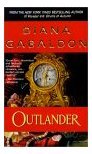
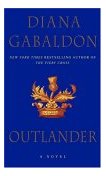
I first tried to read Outlander a couple years ago, and I found that for whatever reason I couldn't get into it. Then, people started talking about it all around me these last few months, so I decided to give it another go. I couldn't find my copy of it at first, so I had to borrow from my friend, but I have read it now. I don't know what was wrong with me last time I tried because I loved it this time around!

From the back of the book:

The year is 1945. Claire Randall, a former combat nurse, is back from the war and reunited with her husband on a second honeymoon - when she innocently touches a boulder in one of the ancient stone circles that dot the British Isles. Suddenly she is Sassenach - an "outlander"- in a Scotland torn by war and raiding border clans in the year of Our Lord... 1743.

Hurled back in time by forces she cannot understand, Claire is catapulted into the intrigues of lairds and spies that may threaten her life... and shatter her heart. For here James Fraser, a gallant young Scots warrior, shows her a love so absolute that Claire becomes a woman torn between fidelity and desire... and between two vastly different men in two irreconcilable lives.

The novel starts out rather dull, so I can understand why I didn't like it the first time through. The man that Claire has married in 1945 is rather addicted to history, and gets so wrapped up in that there is very little action until Claire touches the stones that send her back into history. I must be honest, I like fantasy, so time-travel is not all that strange to me. It was the idea of time travel in a historical fiction novel that always makes me a little leery. The truth is, though, I think that the way that Gabaldon sends Claire back into time is believable because she uses something that people today do not understand. The rocks that stand, like Stonehenge, are a archealogical mystery, so who is to say if you are not standing there at a certain time during the year that you will not be sent back in time. Stranger things can happen.

When Claire goes back in time, she is obviously not sure what is going on around her. One minute she was picking an interesting flower, and the next time men in ancient uniforms are running around her. She is not dressed properly for the times, and the first people she runs into are the British army, specifically a man by the name of Jack Randall, her husbands many great, grandfather. A man that her husband respects and looks up to because history has painted a wonderful picture of him. We quickly learn, though, that history does not always tell the whole story. Jack Randall is a brute who is bent on anger and injury. He shows up many times throughout the novel, and never once does he show the sunny picture that Claire's husband painted him as.

Who would have imagined what would have happened if she had been left with this heartless man, but when Randall thought he had her a man comes out of now where and whisks her off on another adventure. These are Scottish men, men that Claire finds herself connected to for the time being. She shows them that she is not a hopeless woman when she saves one of their injured, James Fraser. It is nothing at the time, but before the novels end, James (Jamie) will become an important part of the novel. You see, Randall is not finished with Claire, and in an attempt to save her, a member of the MacKenzie clan sees to that she marries a Scottish man so that she does not fall under the category as being a English woman, and thus at Randall's beck and call. This Scottish man is none other than Jamie Randall.

This marriage opens interesting circumstances for the young heroine because she is determined to return to her own time, so how can she marry this Jamie person when her heart belongs to another man in another time. In the end, though, she values her life more than worrying about infidelity. This begins a whole new chapter in her life because this strange, young Scottish man genuinely loves her and she finds feelings for him developing. So, when the choice is presented to her that she go back to 1945 or stay here with him, she has a difficult choice to make.

As your read this novel you can really imagine that you are living in the 1700's, the picture that Gabaldon paints through Claire's eyes is that clear. You get to witness the clan fights, see deep dark secrets about history played out, and understand what it is like to go from having a comfortable existence to going back to a time where many modern (for 1945) luxuries do not exist. Gabaldon will have you hooked as you get going, and you will not want to stop experiencing this English woman's adventures through time with her young Scottish love.

5/5


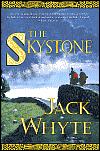
Jack Whyte is Canadian and rather well known around the globe for his novels that tell the story leading up to and about the legendary King Arthur. This novel is the first book in his A Dream of Eagles series.

Born of the nightmare chaos of the Dark Ages, the Dream of Eagles produced a King, a country, and an everlasting legend - Camelot.

Publius Varrus is a veteran Roman officer and a maker of swords. In the early fifth century, amidst the violent struggles between the people of Britain and the invading Saxons, Picts and Scots, he and his former general, Caius Britannicus, forge the government and military system that will become known as the Round Table, and initiate a chain of events that will lead to the coronation of the High King we know today as Arthur.

Rich in historical detail, brimming with drama, intrigue and passion, The Skystone gives new resonance to an enduring and powerful legend.

Many people might have noticed that I have a very strong desire to support my local authors. I don't even remember where this book came from, judging by the shape I would think a yard sale or flea market. It has been in the to be read pile for a while. I think I thought there was no possible way that I could buy one random book by him and have it be book 1, but low and behold, my one random book is book 1.

I have always had a fascination with the story of Arthur, since I was very little. I heard someone talking about this series the other day, and I decided that it was about time that I give it a try. I really liked it, and you know what, I don't know why. It happens before Arthur even enters the stage, and when I really think about it, not a lot happened in it, but I loved it. I haven't been reading as much as I would like to be, so this was an accomplishment for me this month.

Anyways, the novel follows Publius Varrus. Arthur has not even been born yet, the wars with the Saxons that would mark most of Arthur's life are just getting started, and the Roman Empire is only now starting to feel the breaks. These are the things that Arthur was supposed to fix, even if it didn't happen exactly that way. Publius is an interesting character. You have to take in the time period to get to like him because there are moments in that book that I just can't stand him. He is appropriate for the early fifth century, but one can not always let men and their ways of dealing with things slide.

One of the things I must applaud Whyte for is his two female main characters that are associated with Publius. They are both strong, independant women for their time. That was a risky thing for Whyte to do. Publius's eventual wife even owns her own lands and businesses, which she inherited from an aunt. This was a very rare thing for the time, and it made the novel more compelling. Even when I try to take history into consideration I can not get passed the fact that women are not meant to be treated the way they can be treated at this time. Subordinate to men, it is just my 21st-century thinking that is at times hard to push aside. So, I was impressed with Whyte for not having meek women characters.

This novel touches on the wars that the Romans were having against the Saxons and Picts. It talks about battle strategies and other war-time things that were prevalant at the time. It is so interesting to think that the settlement that Publius and his friends are putting together in this novel is the stepping stones for what will one day be Camelot. The place that everyone has at least heard of, if not having read various Arthurian retellings. But why this book compelled me to read it so much, I don't know. I was so hooked I was reading it slowly, not because it was bad, but because the book store here didn't have book 2 so I wanted to finish it near the arrival of the copy I ordered in.

This book is also a testament to what life was like in the 5th century without technology. Publius is a blacksmith, and he explains the process of making swords and things in such a way that I was actually interested. And then there are his Skystones, what we know as meteroites. I just love how the men back then spend their time trying to understand where these rocks come from and how it is possible with them thinking that they are the only planet and that heaven is the only thing you find when you go up. I really felt like I was inside the mind of a man from this time period. You will find, though, that somethings will never change, but even still, Jack Whyte wrote an excellent start to what I hope is going to be an interesting series of novels.

5/5


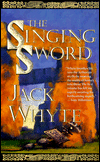
This is the second book in the fantastic Jack Whyte series.

From the back of the book:

It is 395 A.D., and as the Roman armies withdraw from Britain, anarchy threatens the colony that will one day be known as Camelot. Creating their own army and joining with the Celtic people of King Ullic Pendragon, the colonists emerge as a new breed of Britons, ready to forge the government that will be the Round Table and its Knights and to prepare the groundwork for the future coronation of Arthur, first Hight King of Britain.

With all the drama, passion and violence of England's most vibrant history, THE SINGING SWORD continues Jack Whyte's bestselling chronicle of the dream that gave birth to an enduring legend.


I think most people think I am crazy when I tell them I am in love with Jack Whyte. It is his writing I love of course. It is very rare that I can read a book by the same author in a row. It is taking all my will-power to wait until next month to start the next one.

Lots of people look at Jack Whyte as a male-orientated author. I will start off firstly by saying, if you are looking for a romance novel you are not going to find one here. There are a couple brief scenes where their is some action, but I don't think it is enough to attract someone that is looking for a great deal of romance. The majority of the cast of characters are men, which normally would turn me off from the book entirely, because I like to know that women are important. The woman in the novel, as well as book one, though, make it all worthwhile.

The narrator is once again Plautus. He started out with limited beginnings, but then he met Caius, the man who put this new community into action, and suddenly he was someone. I was so impressed with this book because the characters seem so real to me. When something would happen to Plautus, I could feel for the suffering of his wife, Luceiia. She was a strong character, but her husband seemed to bring trouble to himself wherever he went. Plautus, though, would do anything for the safety of this community they call home. I thought he was a wonderful narrator for both novels, but since he is getting older, I am assuming someone else will take the reins in the book 3.

There are so many things that happen in this book that I just can't talk about, because this novel lays so much framework for the story of Camelot and the young king that will one day rule it. You will notice from the blurb I posted above that the Pendragon's are already in position. In this novel, Ullic Pendragon's son marries Plautus's daughter. Then, on practically the same day, Ullic's sister marries Caius's son. So, the union has been struck, the name is in existence, soon will be the time for Arthur to be born. The groundwork has been laid in this novel, as things were explained you could see their bearing on the Arthurian stories you already know.

I think this series is very well-written. It catches my attention and holds on to it for large periods of time. I find myself drawn into this world and that is a good thing because series also end up boring me, I hope that this never happens with this one. I have my fingers crossed that I make it to the end with the same level of wow I start it with. I just can't say enough good things about this series.

4.5/5


I bought this book when it first came out with good intentions of reading it right away, but like always, stuff kept getting in my way. So, when I finally sat down and read it, I was mad at myself for letting such a good book sit unread for so long. It is supposed to be a trilogy, but with the recent death of David Gemmell, no one knows the fate of book 3 except the powers that be. I hope it gets completed because it is a very engaging story.

From the back of the book:

Three lives will change the destiny of nations.

Helikaon, the young prince of Dardania, haunted by a scarred and traumatic childhood. The priestess Andromache, whose fiery spirit and fierce independence threatens the might of kings. And the legendary warrior Argurios, cloaked in loneliness and driven only by thoughts of revenge.

In Troy they find a city torn apart by destructive rivalries. And beyond its fabled walls blood-hungry enemies eye its riches and plot its downfall.

It is a time of bravery and betrayal.

A time of bloodshed and fear.

A time for heroes.

I don't know how many times I have said this, but Troy and Arthurian history is probably my favourite part of history. I am drawn to novels set in this time period more than any other. David Gemmell is one of those authors that I have always meant to read. He has a lot of books that sound good, but I just never got there. Then one day, back in April, this book was peeking out at me from the fantasy section. I probably would have bought it back when it was available in hardcover, it looked so good, but the bookstore here rarely gets hardcover books in. So, I bought it, and then I got busy and read other things.

I now know that I love David Gemmell's writing style. It is hard to take a well-known legend and make it your own, but Gemmell does a fabulous job with this. I was engrossed in the novel the whole way. So much so that I am getting book 2 as soon as it comes out, and I have been looking up other David Gemmell novels that I want to read. Like Jack Whyte, I find myself drawn into Gemmell's world. Gemmell has totally rewritten that Troy myth, and I think he did a very good job.

We have the main hero, Helikaon. He is the king of the seas, and a prince of Dardania. Treated horribly by his father, he is still battling the scars of his childhood. One minute he is like a god, people look up to him, but then he loses his temper and everyone that has scorned him had better watch their back. He gets his revenge in very ghastly ways. He has assasins on his back, but he always seems able to stay one step ahead of them, even if it means help from the people that become his friends. Helikaon is a great character, even when he does wrong, because he has the good of his people in his heart.

Then we have Andromache. What a character. She is the strong female sort that I am always looking for in novels. It is a male dominated world, ancient Greek and Rome, but Gemmell, like Whyte, manages to include females that are above ordinary for the time. She is her own person, and you know she is dominant when she refuses to bow for the King of Troy. She is well-respected by her peers and goes above and beyond other women in this novel. She too has a shaky past, but seems to have discovered a way to rise above it.

Argurios was not someone I expected to like at the beginning of the book. He is actually Helikaon's enemy, but he is loyal. When he is a passenger on Helikaon's ship, he defends Helikaon instead of doing the low thing and taking advantage of his passage to kill him. He falls in love in this novel, and with this love we discover the man that was underneath the hard exterior. He refuses to give into charity, but he will do anything he possibly can for the woman he loves. The enemy in love with the king's daughter, it opens the most amazing possibilites and leads to one of the saddest moments in the book.

These are just three of the characters that parade across the pages of Gemmell's novel. At the end of the book, when Troy is attacked by their enemies, it is these three that rise above the others and take command. It is them that are the heroes of the novel in many ways. They have all faced so much, but in the end they are able to rise above it in the most amazing ways. This is an action-packed novel that will leave you wishing for more.

5/5


The Genre

Historical Fantasy, Alternate History, Witches, Action, Espionage, Romance, Regency


The Plot

From the author's site:

SHADOW OF ALBION is set in 1805, but an 1805 that has seen the Stuarts reign in an unbroken line from the time of Charles II. It is a world where magic works, but when Napoleon bends all Europe to his will, sometimes magic just isn't enough ... which is where the Duke of Wessex takes a hand. A member of the elite White Tower Group, the espionage apparat that seeks to deny Napoleon mastery of Europe, Wessex is a man with a dangerously conflicted nature: espionage is not the work of gentlemen, and at any moment his loyalties may be impossibly divided. King Henry IX presses him to marry in order to extend his protection to Prince Jamie's bride, Princess Stephanie of Denmark, but though the betrothal is an old one, Wessex's bride is not-at-all what he expects. For the Marchioness of Roxbury is quite literally not herself: she is Miss Sarah Cunningham, of an America which broke free of the tyranny of the English Crown, and which has no use for magic...


The Review

I was hooked on this book from the moment I read the first few pages. The characters are very entertaining and I found myself liking even the heroine, which is rather unusual for me. She did have a couple of TSTL moments but, I am pleased to say, she got other them fairly quickly.

The Duke reminds me a little of The Scarlet Pimpernel as he is a very well off Duke who is actually a spy. He goes all over Europe to serve King and country yet he is troubled by his chosen lifestyle. On th eone hand he enjoys being useful to the kingdom but he also worries what would happen to his grandmother should the news ever reach her that the Duke of Wessex is a lowly spy. Back in these days being a spy was NOT a good thing. LOL.


The Verdict

Highly recommended to anyone that loves a good read. This book was very fast paced and I found myself wishing that it would keep going. Fortunately, it seems there is a sequel. I will have to hunt it down.

A solid 4.5 out of 5.

Janet Gleeson's The Grenadillo Box
Tasha ALexander's And Only to Deceive: A Novel of Suspense
Jack Whyte's The Singing Sword
Jack Whyte's The Skystone
Diana Gabaldon's Outlander

About this blog

Welcome to Twisted Kingdom - a review site for science fiction and fantasy books.

There have been some recent changes, most obviously the template, so please bear with us while we set up our links and arrange the reviews on our sidebar.

Please drop us a line at thetwistedk@gmail.com if you notice any craziness, broken links or if you'd like us to add you to our link list.


About Me

My photo
Since I was a little girl I have been fascinated with books. Early photos show me with a book in hand, even if it was not exactly my reading level... My first word was a made-up word meaning 'book', actually. I suppose I had my priorities at an early age... Over the years my interest in books has become one of the defining features of who I am as a person. You can probably call me a bookworm. While I have other interests, reading will always be the one I talk about the most, even if I am not focusing on it as much as I used to.

Followers

Labels